Introduction
Moving goods through a warehouse involves more than simply placing products on a pallet and arranging transportation. Every load needs to remain stable while it is stored, moved by forklift trucks and transported to its destination. Poorly secured goods can shift during handling, increasing the risk of damaged products, disrupted deliveries and additional work for warehouse teams.
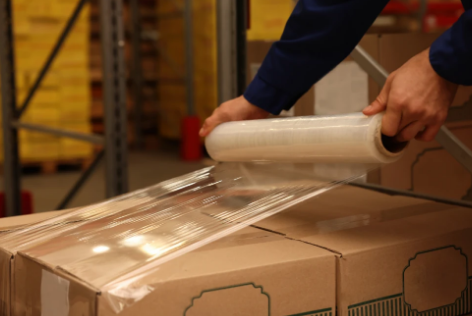
Pallet wrapping is a straightforward but important part of this process. Stretch film holds individual cartons and products together, helping create a more stable unit load. When selected and applied correctly, it can improve handling efficiency and provide an additional layer of protection throughout the supply chain.
Why Load Stability Matters
Palletised goods are frequently moved between different locations. A load may travel from a production area to a warehouse, then to a distribution centre before reaching the customer. During these movements, pallets can experience vibration, turning forces and repeated handling.
If cartons are not properly secured, they may move out of position or become unstable. This can create problems for warehouse operators and increase the possibility of products being damaged.
Stretch film helps hold the load together by applying tension around the products and pallet. The aim is to create a secure unit that can be handled more consistently.
The correct wrapping method depends on the load’s weight, dimensions, shape and packaging materials. Heavy cartons, irregular products and mixed pallet loads may require different wrapping approaches.
Understanding the Benefits of Clear Pallet Wrap
Clear film is particularly useful in warehouses where products need to remain identifiable after wrapping. Labels, barcodes and other markings can often still be viewed without removing the protective layer.
This can make everyday warehouse activities easier, especially when staff need to check pallet contents or identify shipments before dispatch.
Some important advantages include:
- Load containment: Film helps hold cartons and products together during storage and transportation.
- Puncture resistance: A suitable film can withstand contact with edges and handling conditions more effectively.
- Product visibility: Transparent wrapping allows identification labels and markings to remain visible.
- Warehouse convenience: Staff can inspect wrapped loads without routinely removing the film.
- Additional discretion: Wrapping can provide some concealment of pallet contents while retaining visibility of selected labels.
For businesses comparing Pallet Wrap Manchester suppliers, these practical requirements should be considered alongside price and roll specifications.
Selecting the Right Film Thickness and Roll Size
Not every pallet requires the same wrapping material. Choosing an appropriate film involves considering the type of goods being secured and the conditions they will encounter.
Film thickness is one important specification. A film that is unsuitable for the load may tear during application or fail to provide the required level of containment. Businesses should consider product weight, sharp edges, pallet dimensions and the number of handling stages involved.
Roll width also matters. A suitable width can make wrapping more convenient and help operators cover the load efficiently.
Advanced Protective Packaging offers clear pallet wrap in a 400mm x 300m format with a thickness of 17mu. The listed product is supplied in packs of six and contains 30% recycled material. It uses an extended core design and cast film construction. These specifications give businesses a useful starting point when assessing whether the product fits their packaging requirements.
Improving the Pallet Wrapping Process
Even good-quality film needs to be applied properly. Inconsistent wrapping can result in loose sections, unnecessary material use or insufficient support around the load.
A consistent warehouse process can help reduce these problems.
First, products should be arranged securely on the pallet. Cartons should be positioned to create a reasonably even load, avoiding unnecessary overhang where possible.
Next, operators should secure the film around the lower part of the pallet and build up the wrapping pattern while maintaining appropriate tension. The film should be applied consistently, with particular attention given to the base and areas where the load may be vulnerable to movement.
Finally, the completed pallet should be checked before it is moved. Staff should look for loose cartons, damaged film and any signs that the load is unstable.
For businesses handling large volumes, documenting a standard wrapping procedure can help different employees achieve more consistent results.
Supporting Different Commercial Applications
Pallet wrap is used across a wide range of commercial environments. Manufacturers use it to prepare finished goods for distribution, while wholesalers rely on it to consolidate stock before dispatch.
E-commerce fulfilment centres may use stretch film when moving bulk inventory between storage areas. Distribution businesses also use it to prepare mixed shipments containing cartons of different sizes.
In each situation, the objective is similar: keep goods together and make them easier to handle.
The requirements can vary considerably. A pallet containing uniform cartons may be relatively straightforward to wrap, whereas an irregular load may need additional attention to ensure that products remain secure.
Businesses should therefore assess their usual pallet configurations rather than choosing film based on one specification alone.
Considering Recycled Content in Packaging Supplies
Packaging decisions increasingly involve material efficiency as well as performance. Businesses want to protect their goods while considering how packaging materials are sourced and used.
Choosing an appropriate film and applying it efficiently can help avoid unnecessary waste. Operators should use enough material to secure the load properly without automatically applying excessive layers.
Advanced Protective Packaging’s clear pallet wrap contains 30% recycled material, offering businesses an option with recycled content as part of their warehouse packaging supplies.
The right approach is to balance material selection, load security and operational requirements.
Finding Pallet Wrap Supplies in Manchester
Businesses looking for Pallet Wrap film Manchester suppliers should compare practical specifications, including width, length, thickness, film type and recycled content. It is also important to consider whether the product suits the loads being prepared and the company’s normal wrapping process.
Advanced Protective Packaging supplies clear pallet wrap from Manchester to businesses across the UK. Its listed 400mm x 300m film is designed for commercial and industrial pallet securing, with puncture resistance and transparency among its stated features.
Companies can review the product specifications and contact the supplier to discuss their packaging requirements.
Conclusion
Reliable pallet wrapping supports safer, more organised warehouse operations by helping keep products together during storage and transportation. Selecting suitable film, applying it consistently and checking completed loads can all contribute to better handling practices.
For businesses that regularly prepare palletised shipments, choosing the right stretch film is a practical investment in the wider packaging process. A suitable product can help protect goods, improve visibility and make everyday dispatch operations more efficient.