Introduction
When rats become a recurring problem around a home or business, it is natural to focus on the places where they have been seen. Kitchens, storage rooms, gardens and waste areas are often the first locations property owners inspect. However, the source of rodent activity may be much further away from these visible signs. Underground drainage systems, which are rarely inspected during everyday property maintenance, can sometimes provide rodents with shelter and routes towards buildings.
A damaged drainage network can create conditions that make rodent problems harder to resolve. Even when an infestation is treated successfully, an accessible opening or structural defect may allow further rodents to enter the surrounding area. Understanding the relationship between drainage maintenance and rodent activity can help property owners take a more complete approach to prevention.
How Drainage Systems Can Contribute to Rodent Activity
Drainage networks carry wastewater away from buildings through underground pipes and connected chambers. These systems are designed to remain enclosed, but age, ground movement, poor installation and general deterioration can affect their condition.
Rats are capable of moving through underground environments and exploiting small opportunities for shelter or access. Where drainage pipes have cracks, broken joints or missing sections, rodents may be able to move beyond the intended boundaries of the system.
A defect does not necessarily mean rats will enter a particular property. Nevertheless, damaged infrastructure can create potential routes that deserve investigation when unexplained rodent activity continues.
Several drainage-related conditions may be relevant:
- Cracked pipework: Fractures can compromise the structure of a pipe and create openings into surrounding ground.
- Displaced joints: Connections that have moved apart may leave gaps between sections.
- Root intrusion: Tree roots can enter damaged pipes, contributing to blockages and further deterioration.
- Collapsed sections: Structural failure can disrupt normal drainage and create hidden spaces.
- Defective connections: Poorly sealed or damaged junctions may provide opportunities for rodents to move between connected areas.
Identifying these issues requires more than a visual inspection of the property’s interior. In many situations, the condition of underground pipework must be assessed directly.
Why Rodent Activity Can Be Difficult to Trace
Rats rarely remain in one place throughout their activity. They can travel between food sources, sheltered spaces and nesting locations, often using concealed routes that are difficult for property owners to observe.
This behaviour makes it challenging to determine exactly where an infestation began. A rat seen in a kitchen may have entered through a service opening, a gap around pipework, an external wall defect or another accessible route. The location of a sighting alone cannot confirm the point of entry.
Repeated sightings in similar areas can provide useful clues, but they do not always reveal the underlying cause. The same applies when traps or other treatments reduce activity temporarily, only for rodents to return later.
A thorough investigation should consider the building’s layout, external surroundings, waste arrangements and drainage infrastructure. This broader assessment helps avoid focusing on one possible cause while overlooking another.
Investigating Hidden Defects with CCTV Technology
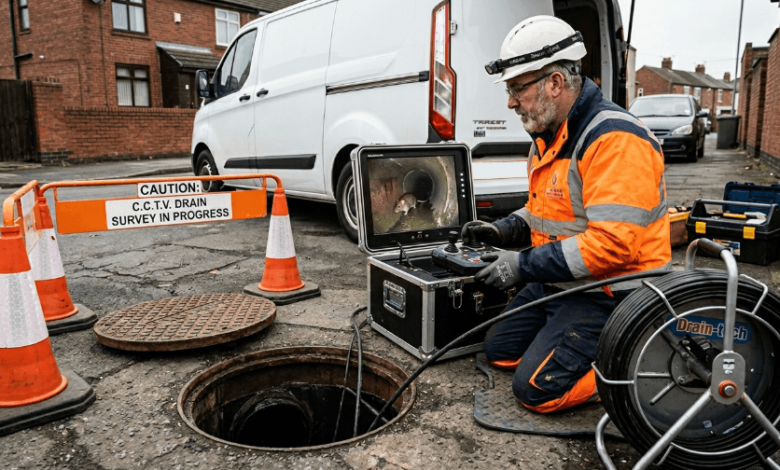
A CCTV drainage inspection provides a way to examine the internal condition of underground pipes. A specialist camera is introduced into an accessible part of the drainage system and guided through the pipework to capture footage of its internal surfaces.
This allows inspectors to look for problems that would otherwise remain hidden beneath floors, gardens, driveways or other areas. Depending on the accessibility and condition of the system, the inspection may identify cracks, obstructions, displaced joints, root intrusion and other visible defects.
The footage can help establish whether the drainage network has problems that may be relevant to a rodent investigation. It can also provide a clearer basis for deciding whether repairs or further checks are needed.
For properties experiencing repeated rat activity, CCTV Drainage Surveys for Rats can help investigate whether underground defects are contributing to the problem. The purpose is not simply to locate rodents but to assess the condition of a potential route through which they may be gaining access.
A camera inspection is a diagnostic tool rather than a treatment in itself. If a defect is discovered, suitable remedial work may still be required.
Connecting Drainage Investigations with Pest Management
Drainage maintenance and pest management address different aspects of a property problem, but they can be closely connected.
Pest professionals focus on assessing rodent activity, reducing existing populations and recommending measures that discourage further infestation. Drainage specialists investigate the condition of underground pipes and identify structural issues that may need repair.
Where both concerns are present, coordinating these activities can make the overall response more effective.
A suitable investigation may involve:
- Recording where and when rats have been seen.
- Looking for droppings, gnawing marks and other evidence of activity.
- Checking accessible areas around the building for potential entry points.
- Reviewing whether drainage problems or unusual smells have been reported.
- Arranging a specialist inspection if underground defects are suspected.
- Planning appropriate treatment and repairs based on the findings.
This process helps ensure that decisions are based on evidence rather than assumptions. It also makes it easier to distinguish between a drainage defect that needs attention and a separate rodent access problem.
See also: Why Emerging Indian Businesses Deserve a Place in Portfolios
Why Hygiene and Building Maintenance Still Matter
Although underground drainage can be an important part of some infestations, property owners should not overlook everyday prevention. Rats are attracted to accessible food, water and shelter. Poor waste management and neglected outdoor areas can make a building more appealing even when its drainage system is in good condition.
Businesses that handle food should pay particular attention to waste storage, cleaning schedules and the condition of delivery or storage areas. Residential properties can benefit from secure rubbish containers, properly stored food and regular checks of garages, sheds and garden spaces.
Building maintenance is equally important. Small gaps around pipes, damaged air vents, broken doors and openings around utility connections may provide access independent of the drainage network.
A practical maintenance routine should include:
- Storing food and animal feed in sealed containers.
- Keeping bins closed and removing waste regularly.
- Cleaning food preparation and storage areas consistently.
- Reducing clutter that could provide shelter.
- Checking external walls and service openings for gaps.
- Maintaining drainage covers and accessible inspection chambers.
- Investigating unusual smells, leaks and recurring blockages.
These measures reduce opportunities for rodents to settle around a property and complement any professional work.
What Should Happen After a Drainage Defect Is Found?
The appropriate response depends on the nature of the problem identified during inspection. A blockage, a cracked pipe and a displaced joint do not necessarily require the same repair method.
A drainage professional can assess the footage and advise whether cleaning, localised repairs or more extensive work may be necessary. In some cases, further investigation may be recommended to understand the full extent of the defect.
Once relevant repairs have been completed, property owners should continue monitoring the areas where rodent activity was previously reported. Pest management measures may still be needed to address rodents already present in the building or its surroundings.
It is important not to assume that repairing one defect automatically eliminates every possible route. A property may have several access points, and the findings should be considered as part of the wider assessment.
Taking a Long-Term View of Property Protection
Recurring rodent activity can be disruptive for households and costly for businesses. It may affect stored goods, damage materials and create hygiene concerns. A response that only addresses visible activity can leave property owners dealing with the same issue again.
Effective Pest control should take account of the circumstances surrounding an infestation. Where there are reasonable grounds to suspect a drainage-related source, investigating the underground network may provide information that ordinary inspections cannot reveal.
The most useful approach combines accurate diagnosis, appropriate treatment, necessary structural repairs and ongoing prevention. Each part serves a different purpose: treatment addresses existing activity, repairs deal with identified defects, and good maintenance helps reduce the conditions that attract rodents.
Underground drainage is easy to overlook because most of the system is out of sight. Yet its condition can have a direct bearing on the wider maintenance of a property. By taking drainage concerns seriously and investigating repeated rodent problems systematically, homeowners and businesses can make better-informed decisions and improve their chances of maintaining a cleaner, safer environment.