Reliable electricity is an important part of organising outdoor events, temporary workplaces and commercial activities. Lighting, catering equipment, electrical tools and essential facilities all depend on a suitable power supply. When a permanent connection is unavailable or cannot meet the demand, a generator can provide a practical temporary solution.
However, hiring a generator involves more than choosing a machine with a particular capacity. Organisers and project managers need to understand their electrical requirements, consider where the equipment will operate and plan how power will be distributed safely. Good preparation helps avoid interruptions and makes it easier to coordinate different activities.
For businesses arranging projects in Telford and nearby areas, local equipment hire can be a useful starting point when exploring temporary power options.
Why Outdoor Projects Need Temporary Power
Outdoor locations do not always have access to the electrical infrastructure required for commercial activities. A field used for an event, a temporary warehouse or a construction site may need an independent source of electricity.
Generators can support suitable electrical equipment where a permanent connection is unavailable. Their usefulness depends on the generator specification, the connected load and the conditions in which the machine will operate.
Common applications include:
- Powering lighting at temporary events.
- Supporting electrical equipment at construction sites.
- Providing electricity for suitable warehouse operations.
- Supplying temporary facilities at outdoor venues.
- Supporting catering arrangements at marquees.
- Providing temporary power during planned site work.
Each application has different requirements. A wedding marquee may need electricity for lighting, catering and entertainment, while a construction project may require power for tools and temporary site facilities. Assessing these needs before booking is essential.
Start with a Clear Electrical Requirements List
Before arranging equipment, the organiser should identify every item that needs to be powered. This is particularly important when several activities will take place simultaneously.
A list of appliances and equipment should include their electrical ratings and expected operating times. Some devices draw more power when starting than they do during normal operation, so their starting requirements must also be considered.
For an event, the list might include:
- Internal and external lighting.
- Catering and food preparation equipment.
- Sound and entertainment systems.
- Temporary refrigeration.
- Office or ticketing equipment.
- Other essential electrical facilities.
A construction site may have a different list involving tools, work lights and temporary facilities.
The combined electrical demand should be assessed by a suitably competent person. This helps establish whether the proposed generator can support the installation without being overloaded.
Exploring Local Equipment Hire in Telford
Hiring equipment locally can make communication and delivery planning easier, especially when machinery needs to reach a site within a specific timeframe.
Businesses searching for Local plant hire in Telford can explore the equipment offered by TT54 Plant Hire. The company serves Telford, Shrewsbury and surrounding areas, with machinery and equipment options for construction, industrial and domestic applications.
When discussing a generator requirement, customers should explain the type of project and what they intend to power. Details about the electrical load, supply requirements, operating hours and site location can help the provider understand the application.
It is also important to discuss the delivery location. A generator may need to be positioned in a particular area to provide suitable access and allow safe cable routing. The site should be prepared before the equipment arrives.
Understanding the Available Generator Specification
Generator capacity is an important factor when selecting temporary power equipment. Ratings may be expressed in kilovolt-amperes (kVA) and kilowatts (kW), which describe related but different aspects of electrical output.
The relationship between these ratings depends on the power factor. As a result, customers should not assume that a generator’s kVA rating is identical to its usable kW output.
For projects looking at 20kva generator hire Telford, it is worth reviewing the actual equipment specification before making a decision.
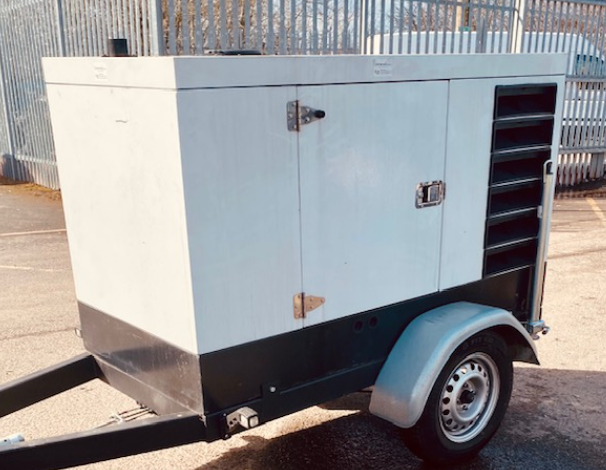
TT54 Plant Hire describes a trailer-mounted, three-phase generator with a 22 kVA rating on its generator hire page. Although the page is relevant to searches for 20 kVA generator hire, customers should confirm the current specification and check whether it meets their particular electrical requirements.
What does three-phase power mean?
Three-phase electricity is used in many commercial and industrial applications. Some equipment is designed specifically for this type of supply, while other appliances require single-phase electricity.
The generator and distribution arrangements must be compatible with the connected equipment. A competent electrical professional should assess the installation, including load distribution and protective devices.
Why the actual load matters
A generator should be selected according to the equipment that will operate from it. Simply counting the number of appliances is not enough.
The power ratings, starting demands and expected operating pattern should all be considered. This is especially important when motors, refrigeration equipment or other machinery are involved.
Planning Generator Use at Weddings and Marquees
Outdoor celebrations often require temporary electrical arrangements. Weddings, private functions and other events may use marquees or temporary structures that do not have access to a permanent supply.
Electricity may be needed for decorative lighting, catering facilities, sound systems and other event equipment. The organiser should prepare a complete list of electrical requirements and coordinate with the relevant suppliers.
The generator location should be selected carefully. It needs to be outdoors in a properly ventilated position, away from enclosed or occupied spaces and arranged so exhaust gases cannot enter buildings or ventilation openings.
Noise is another important consideration. Event organisers should consider nearby properties, guests and the location of the main activities. A suitable position can help manage disturbance while allowing authorised personnel to access the equipment.
Cables should be routed and protected to prevent trip hazards and accidental damage. Any distribution equipment must be appropriate for the installation and handled by competent personnel.
Supporting Temporary Warehouse Operations
Warehouses and storage facilities sometimes need temporary electricity during construction, refurbishment or changes to their normal power arrangements.
Lighting is particularly important because staff need suitable visibility when moving goods and carrying out routine activities. Depending on the facility, temporary power may also be needed for selected electrical equipment and essential operational services.
Before hiring a generator, managers should identify which functions need to remain operational. They should distinguish between essential loads and equipment that can be switched off during temporary arrangements.
This helps create a more accurate power requirement and avoids unnecessary demand. It also allows the business to establish priorities if several pieces of equipment cannot operate simultaneously.
A clear operating schedule can further improve efficiency. Managers should communicate which equipment will be connected, who is responsible for monitoring the installation and what procedures apply if the power supply is interrupted.
Choosing a Suitable Generator Position
The generator should be positioned according to the manufacturer’s instructions and the conditions at the site. The location must provide adequate ventilation, safe access and sufficient separation from people and occupied buildings.
Generators produce exhaust gases and should never be operated inside enclosed spaces or poorly ventilated areas. Exhaust must be kept away from doors, windows and air intakes.
Other practical considerations include:
- Providing a stable and appropriate parking position.
- Keeping the equipment away from unnecessary foot traffic.
- Allowing authorised personnel access for checks.
- Protecting cables from vehicles and pedestrian movement.
- Managing fuel safely.
- Considering noise in relation to nearby activities.
- Following the manufacturer’s clearance requirements.
The site manager should also check that the delivery vehicle can reach the intended position. A trailer-mounted generator requires an appropriate access route and enough room for safe positioning.
Fuel Planning and Operating Time
The required operating duration should be established before the hire begins. A generator needed for an evening event may have different requirements from one supporting a construction site over several working days.
Customers should discuss fuel arrangements with the provider and refer to the manufacturer’s information for expected consumption. Actual usage depends on the generator and the load being supplied.
For longer operations, someone should be responsible for monitoring the equipment and arranging refuelling when required. Fuel must be stored and handled according to applicable safety requirements.
Refuelling should follow the manufacturer’s procedures. The generator should not be refuelled carelessly while operating or when hot, and only authorised people should carry out the task.
Electrical Safety and Site Responsibilities
A temporary generator installation must be planned and managed safely. Hiring the machine does not automatically make the electrical arrangement suitable for every site.
A competent electrical professional should assess the connected equipment, distribution system and protective arrangements. Cables, connectors and other components must be appropriate for the intended use and environmental conditions.
Before operation, the responsible team should review the manufacturer’s instructions and check for visible damage or defects. Any suspected fault should be reported, and unsafe equipment should not be used.
Workers should also be aware of hot surfaces, moving parts, exhaust hazards and the risks associated with fuel. Access to the generator should be restricted to authorised personnel, with appropriate arrangements for monitoring and responding to problems.
Organising Delivery and the Hire Period
The timing of delivery can influence the success of a temporary power arrangement. Ideally, the generator should arrive with enough time for positioning, connection and the required checks before the event or project begins.
Customers should confirm the hire period, delivery date and collection arrangements with the provider. TT54 Plant Hire offers delivery at an additional charge, so the cost should be included when preparing the overall budget.
The hire conditions should also be reviewed in advance. Customers may need to provide identification and supporting documents, while responsibilities relating to security, damage, loss and equipment returns should be understood.
A clear agreement helps organisers prepare the site and avoid confusion during the hire period.
Conclusion
Temporary power plays an important role in construction, warehouse operations and outdoor events where a suitable permanent electricity supply is unavailable. Generators can support these activities when the selected equipment matches the electrical demand and is installed in an appropriate location.
The best approach is to assess connected loads, confirm supply compatibility, plan fuel requirements and consider the practical conditions of the site before booking. Competent electrical planning and careful operation are equally important.
By preparing these details in advance and discussing the requirements with a local equipment hire provider, businesses and event organisers can arrange temporary power more confidently and keep their activities organised.