Introduction
Office interiors are designed to support a variety of activities, from individual work and team collaboration to client meetings and informal discussions. While furniture, lighting and decorative finishes contribute to the appearance of a workplace, the materials covering its walls can also influence how the environment sounds.
Many modern offices feature extensive glass partitions, plasterboard walls and other hard surfaces. Although these materials create clean and contemporary interiors, they can reflect sound waves and contribute to unwanted echo. When several conversations take place simultaneously, the resulting noise can make certain areas less comfortable for employees.
Wall-mounted acoustic treatments offer a practical way to address these challenges while introducing attractive design features. Available in different shapes, materials and finishes, they allow businesses to combine sound absorption with architectural creativity.
Why Wall Surfaces Matter in Office Acoustic Design
Walls are an important consideration when planning the acoustic characteristics of a commercial interior. In rooms containing large reflective surfaces, sound can repeatedly bounce between walls and ceilings before gradually losing energy.
This process creates reverberation, which can make conversations less distinct and increase the perceived noisiness of a room. The effect may be particularly noticeable in meeting spaces, collaborative offices and reception areas where people frequently communicate.
Adding suitable sound-absorbing materials to selected wall surfaces can help manage these reflections. However, product selection should depend on the dimensions of the room, existing materials and the activities taking place.
A well-planned specification considers both the acoustic requirements and the appearance of the finished interior.
Choosing the Right Acoustic Panels for Commercial Workplaces
Businesses have different requirements when selecting wall treatments. Some prefer discreet products that blend into existing interiors, while others want decorative features that become prominent elements of the design.
Modern acoustic office panels provide flexibility in both respects. They are available in various shapes, thicknesses, colours and textures, making it possible to coordinate sound-absorbing treatments with furniture, flooring and corporate branding.
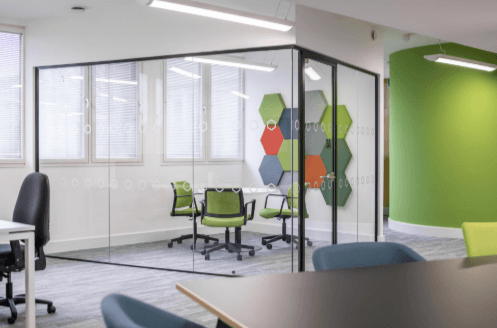
For example, a professional boardroom might benefit from fabric-covered panels in neutral colours, whereas a creative office could use geometric patterns or contrasting finishes to create a distinctive feature wall.
The Acoustics Company offers several wall product categories, including acoustic panels, PET panels, 3D panels, dual-layer wall panels, groove wall panels and printed panels. These collections give architects and interior designers different ways to incorporate acoustic treatments into commercial projects.
Understanding the Benefits of Recycled PET Panels
Material selection is an important part of modern interior design, particularly for businesses that want to consider environmental factors alongside functionality.
Recycled PET is used in several acoustic products because it can be manufactured into lightweight panels with different thicknesses and decorative configurations.
The Acoustics Company’s Alpha Panel is manufactured using a minimum of 75% post-consumer recycled PET fibre. Available in 12mm and 24mm thicknesses, it is designed for wall mounting, ceiling suspension and integration into acoustic rafts and baffles.
The product is also supported by a verified Environmental Product Declaration and manufactured under the SCS Recycled Content programme.
Its versatility makes it relevant to commercial interiors where designers want to combine acoustic considerations with material-conscious specifications.
Decorative Wall Panels That Complement Modern Architecture
Acoustic treatments do not need to look like conventional technical equipment. Decorative wall panels can introduce depth, texture and visual character while serving a functional purpose.
Three-dimensional panels are one example. Their sculptural surfaces create distinctive visual effects and provide sound-absorbing features within the interior.
The Acoustics Company’s Tone collection includes Pyramid, Ripple, Concave, Diamond, Abstract and Wave designs. These products use different surface patterns to create decorative wall arrangements.
Fabric-covered panels provide another approach. The Montage collection, for example, includes triangular, rectangular, hexagonal, circular and square configurations. These panels use BASOTECT melamine foam and are available in different thicknesses and fabric colours.
Such variety allows designers to develop coordinated wall arrangements that suit the character of each workplace.
See also: Commercial Kitchens: Creating the Environment for Hospitality Businesses
Using Grooved Panels to Create Feature Walls
Grooved wall panels are particularly useful for projects where architectural appearance is an important consideration.
Their carved or precision-cut patterns create texture and visual depth, allowing large wall surfaces to become distinctive design features. Depending on the chosen configuration, panels can introduce subtle linear details or more elaborate geometric arrangements.
The Acoustics Company’s Etch collection is manufactured using its Alpha recycled PET panel. Available design techniques include simple grooves, double-layer grooves and customised printing.
Different patterns provide opportunities to create unique interior compositions without relying exclusively on paint or conventional decorative wall coverings.
For businesses developing contemporary offices, these products can help connect acoustic treatment with the wider architectural concept.
Acoustic Wall Treatments for Open and Collaborative Offices
Open workplaces frequently contain several teams working within the same environment. Discussions, telephone calls and collaborative activities can create overlapping sound, particularly when reflective surfaces are present.
Strategically positioned acoustic wall treatments can help manage reflected sound in these spaces. They may be incorporated behind workstations, along meeting-area walls or around collaborative zones, depending on the room’s layout.
The objective is to introduce appropriate absorbing surfaces without making the office feel enclosed or visually crowded.
Designers should also consider ceiling treatments, desk dividers and freestanding screens where additional acoustic measures are required. Combining different product categories can provide a more coordinated approach than relying on wall panels alone.
Selecting Acoustic Office Panels for Noise Reduction
When businesses are researching acoustic office panels for noise reduction, they should first identify the specific problems within their workplace. Excessive reverberation, reflected conversations and the acoustic characteristics of large rooms may require different product arrangements.
Wall-mounted treatments can be selected according to the available surface area, existing finishes and the activities taking place nearby. For example, a meeting room may benefit from a combination of fabric-covered wall panels and suitable ceiling treatments, while a shared office might require decorative PET panels alongside desk screens.
It is important to understand that sound absorption and soundproofing are different concepts. Wall-mounted acoustic panels primarily help manage sound within a room by absorbing part of the sound energy that reaches them. They do not automatically prevent sound from passing through walls into neighbouring spaces.
Businesses seeking greater separation between rooms may also need to consider wall construction, insulation, doors and other building elements.
Customisation for Different Office Requirements
Commercial projects often involve specific dimensions, colour schemes and architectural features. Standard products may not always suit the requirements of every interior.
Customisation allows designers to consider alternative panel sizes, shapes, finishes and patterns. This is especially valuable when creating feature walls or incorporating acoustic products into distinctive corporate environments.
For example, a company may choose contrasting panel colours to reflect its branding, while another project may require subtle finishes that complement existing furniture and architectural materials.
The Acoustics Company’s product range includes several customisable options, with selected collections offering made-to-order dimensions and bespoke decorative patterns.
Working with an experienced manufacturer can help project teams explore these possibilities before finalising their specifications.
Installation and Long-Term Considerations
The success of a wall treatment depends partly on appropriate installation and product placement. Before specifying panels, designers should assess the wall construction, fixing requirements and surrounding building services.
Maintenance should also be considered. Different fabrics, finishes and materials may have different cleaning requirements, so product selection should reflect the intended environment.
Offices with high levels of daily activity may require finishes that are practical to maintain over time. In addition, businesses should consider how future changes to furniture arrangements or room layouts might affect the position of acoustic treatments.
Early coordination between architects, interior designers, contractors and manufacturers can help avoid unnecessary complications during installation.
Conclusion
Acoustic wall treatments provide businesses with an opportunity to improve the sound characteristics of commercial interiors while introducing distinctive decorative features. Recycled PET panels, fabric-covered products, three-dimensional designs and grooved wall coverings offer different ways to combine functionality with architectural creativity.
The most suitable solution depends on the room’s dimensions, existing materials and intended use. Understanding these requirements before selecting products helps ensure that acoustic treatments contribute meaningfully to the overall interior design.
With its range of wall panels, decorative finishes and customisation possibilities, The Acoustics Company provides options for architects, designers and businesses developing modern commercial environments. By treating wall design as part of the wider acoustic strategy, workplaces can achieve a more considered balance between appearance and sound comfort.