Introduction
Lighting plays a major role in how buildings function, feel and perform. Whether it is a busy office, a retail environment, an industrial workspace or a family home, the right lighting arrangement can improve visibility, create a comfortable atmosphere and support everyday activities.
Traditional lighting systems have served buildings for many years, but advances in lighting technology have introduced more efficient alternatives. LED lighting has become an increasingly popular choice because it offers several practical advantages, including energy efficiency, flexible installation options and a wide range of applications.
For property owners considering an upgrade, understanding the benefits of modern lighting can help them make informed decisions.
Why Lighting Choices Matter
Lighting is often treated as a finishing detail during construction or refurbishment. However, it should be considered an important part of building design.
In commercial environments, suitable lighting supports employees as they carry out their responsibilities. Offices need appropriate illumination for computer work and meetings, while warehouses require sufficient visibility across storage areas and operational spaces.
Retail businesses may use lighting to highlight products and create an inviting environment for customers. Restaurants and hospitality venues often require different lighting arrangements for dining areas, kitchens and external spaces.
Residential properties also benefit from thoughtful lighting design. Kitchens, bathrooms, bedrooms and living areas all have different requirements.
Choosing suitable fittings and positioning them correctly can make spaces more practical without compromising their appearance.
Understanding the Advantages of LED Technology
LED stands for light-emitting diode. Unlike traditional incandescent bulbs, which produce light by heating a filament, LEDs generate light through electronic components.
This technology provides several advantages for property owners.
One major benefit is energy efficiency. LED products generally use less electricity than traditional incandescent lighting to produce comparable illumination. This can help reduce lighting-related electricity consumption, particularly in buildings where lights operate for extended periods.
LED fittings also commonly have longer rated lifespans than conventional bulbs. This can reduce the frequency of replacements and make maintenance easier, especially where lights are installed at considerable heights.
Another advantage is the variety of available designs. LED technology is used in ceiling panels, downlights, floodlights, strip lighting, industrial fittings and decorative installations.
This flexibility makes it suitable for many different environments.
Planning a Professional LED Lighting Installation
Selecting LED products is only one part of a successful lighting project. The installation itself needs to be planned around the building’s layout and intended use.
Factors such as ceiling height, room dimensions, existing electrical arrangements and the activities carried out in each space all influence the most appropriate solution.
For example, a large warehouse may require high-bay lighting to provide sufficient illumination across extensive floor areas. An office might benefit from evenly distributed LED panels, while a retail premises could use directional lighting to highlight displays.
Property owners planning improvements can explore a professional LED lighting service to understand the available installation options.
A suitable assessment can help establish the required brightness, fitting positions and equipment specifications before work begins.
This is particularly important when replacing an older lighting system because existing fittings may not provide the best arrangement for modern LED products.
LED Lighting for Offices and Commercial Workplaces
Office lighting needs to support different activities throughout the working day. Employees may spend hours reading documents, using computers, attending meetings and completing detailed tasks.
Insufficient illumination can make certain activities uncomfortable, while poorly positioned fittings may create glare or uneven lighting.
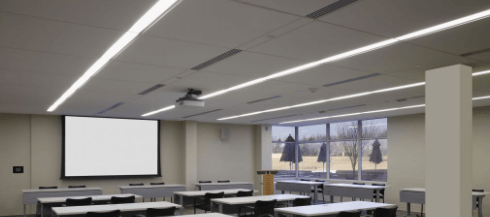
Modern LED panels are commonly considered for office environments because they can provide broad, consistent illumination.
Businesses should consider several factors when planning an office lighting upgrade:
- Suitable brightness for different working areas.
- Colour temperature appropriate for the environment.
- Even distribution across desks and shared spaces.
- Control options for meeting rooms and less frequently used areas.
- Compatibility with existing ceilings and electrical installations.
Meeting rooms may require flexible lighting arrangements, while corridors and storage rooms can have different illumination requirements.
A properly planned installation takes these differences into account rather than treating the entire building as one uniform space.
Improving Retail and Customer-Facing Environments
Lighting has a strong influence on the way customers experience a retail environment.
A well-lit shop can make products easier to examine and help create a welcoming atmosphere. Different lighting techniques can also be used to distinguish display areas, promotional sections and customer walkways.
LED spotlights can provide focused illumination for selected products, while general ceiling lighting can maintain visibility throughout the premises.
Colour temperature is another important consideration. Warmer lighting may create a relaxed atmosphere in certain retail environments, whereas cooler lighting can suit spaces that require a brighter, more contemporary appearance.
The choice should reflect the business’s branding, products and interior design.
Retailers should also consider how lighting operates outside normal opening hours. Appropriate controls can help manage energy consumption in storage areas, staff rooms and other spaces that do not require continuous illumination.
Industrial and Warehouse Lighting Requirements
Industrial premises and warehouses often present different lighting challenges from offices and shops.
Large ceiling heights, extensive floor areas, storage racks and machinery can make lighting distribution more complicated.
LED high-bay fittings are frequently used in these environments because they are designed for applications involving greater mounting heights.
The layout should provide appropriate illumination across working areas, aisles and equipment locations. Shadows and poorly lit sections can make certain tasks more difficult, so fitting positions need careful consideration.
Industrial lighting equipment should also be suitable for the conditions in which it will operate. Dust, moisture, temperature variations and other environmental factors may influence product selection.
Businesses should assess the working environment before choosing fittings.
A professional installation can help ensure that the lighting arrangement meets the practical requirements of the facility.
Using LED Lighting to Improve Outdoor Areas
Outdoor lighting is another area where LED technology can offer practical benefits.
Commercial properties may require illumination around entrances, car parks, loading areas, pathways and building exteriors.
Suitable outdoor lighting helps people navigate these spaces and improves visibility during darker hours.
LED floodlights are commonly used for larger external areas, while wall-mounted fittings can provide illumination around entrances and access points.
The equipment must be suitable for outdoor conditions, including exposure to rain and dust. Appropriate weather protection and correct installation are essential.
Property owners should also consider light direction and positioning to avoid unnecessary glare or light spilling into neighbouring properties.
See also: Why Emerging Indian Businesses Deserve a Place in Portfolios
The Importance of Energy-Efficient Lighting Controls
An effective lighting system is not only about the fittings themselves. Controls can also influence how efficiently electricity is used.
Occupancy sensors can switch lights on when movement is detected and turn them off after an appropriate period of inactivity. These can be particularly useful in corridors, storage rooms, toilets and other areas that are not continuously occupied.
Timers can also help businesses manage lighting schedules.
In some environments, dimming controls allow illumination to be adjusted according to the time of day or the activity taking place.
However, not every LED fitting is compatible with every control system. Product specifications should be checked before selecting equipment.
A coordinated design can help ensure that the fittings and controls operate together correctly.
Maintaining LED Lighting Installations
Although LEDs generally have long rated lifespans, they still require appropriate maintenance.
Dust accumulation, damaged fittings, loose connections and electrical faults can affect lighting performance.
Businesses should include lighting within their wider building maintenance arrangements. Any damaged equipment or unusual electrical behaviour should be investigated by competent professionals.
Cleaning fittings where appropriate can also help maintain illumination, provided that suitable safety precautions are followed.
When replacing individual fittings, property owners should check compatibility and specifications rather than selecting products based solely on appearance.
Professional advice can help identify suitable replacements and investigate recurring issues.
Choosing the Right Lighting Upgrade for Your Property
Every property has different lighting requirements. A solution that works well in an office may not be appropriate for a warehouse, restaurant or residential building.
Before beginning an upgrade, property owners should consider their priorities. These might include reducing energy consumption, improving visibility, modernising interiors or replacing ageing equipment.
It is also important to establish whether existing wiring and electrical arrangements are suitable for the proposed installation.
For businesses and property owners considering improvements, LED lighting Telford provides a relevant starting point for exploring professional lighting solutions in the local area.
Discussing the project with an experienced electrical contractor can help establish suitable products, installation requirements and practical timescales.
Conclusion
Modern LED lighting offers property owners an opportunity to improve illumination while considering energy efficiency, appearance and maintenance requirements.
From office panels and retail spotlights to warehouse high-bay fittings and outdoor floodlights, the technology can support a wide range of applications.
However, achieving good results requires more than choosing efficient bulbs. The layout, brightness, equipment specifications and electrical installation all need appropriate consideration.
With careful planning and professional installation, businesses and property owners can create lighting arrangements that support their everyday activities and provide lasting practical value.