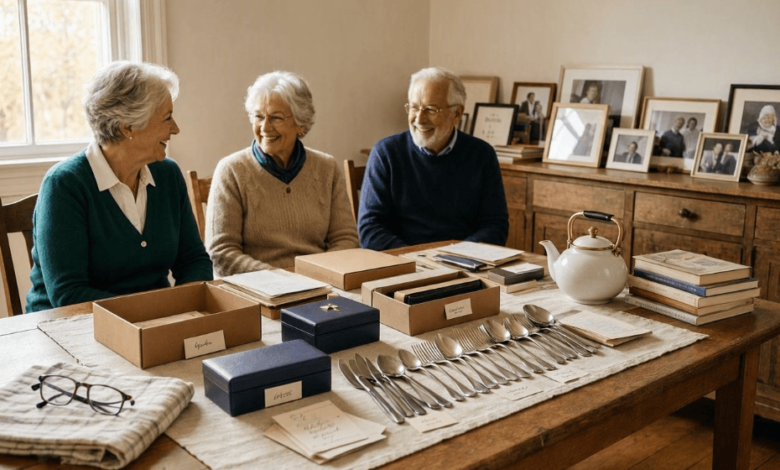
Downsizing a home looks simple from the outside and turns out to be anything but. Somewhere between the furniture decisions and the paperwork, you open a cabinet or a drawer and find it. The silverware that only came out at Christmas. A tin of old coins. A jewelry box no one has touched in years. And the question lands with a little jolt. Is any of this worth something, and what do I actually do with it?
Whether you are downsizing your own home or helping a parent move somewhere smaller, the silver and valuables are often the part people handle worst. They either give it away without realising it had value, or they hold on to boxes of silver that turn out to be worth very little. This guide is about getting it right. Sorting calmly, spotting what actually matters, and turning the genuinely valuable items into either cash or a considered decision, without the overwhelm.
Start by Sorting, Not Deciding
The single biggest mistake in a downsizing project is trying to value things while you are still finding them. It turns a manageable job into an exhausting one. Instead, do a first pass that is purely about sorting into rough groups, with no decisions yet.
For anything metal or potentially precious, four piles work well. Marked solid silver or gold, which carries a stamp like 925, sterling, or 14K. Marked plate, which reads EPNS, EP, silver plate, or silver on copper. Coins, meaning any old or foreign looking pieces set aside as a group. And unsure, for anything with no visible marks or that you simply cannot read.
Getting everything into these four groups first means that when you do start valuing, you are working through organised piles instead of a chaotic tabletop. It also shrinks the job immediately, because the plate pile, which is often the biggest, usually needs the least attention.
The Solid Versus Plate Distinction That Saves and Makes Money
Here is the distinction that matters more than any other. Solid silver has real melt value. Silver plate has almost none. A large, impressive looking canteen of cutlery can be worth a small fortune or virtually nothing, and the difference is a thin layer of silver over a base metal.
The stamps tell the story. A mark of 925, point 925, or the word sterling means 92.5 percent solid silver, and that is valuable. Marks of 800, 835, or 900 are still solid silver at a slightly lower purity, common on European and older continental pieces. But EPNS, EP, A1, or silver on copper all mean electroplate. Keep those pieces if they are lovely, but not for their metal.
If a piece has no marking, a couple of harmless checks help. Silver is not magnetic, so a magnet that grabs firmly means base metal underneath. Solid silver also develops a soft grey tarnish rather than the flaking or brassy wear you see where plating has rubbed through. Neither test is definitive, but together they will stop you treating a box of plate as a windfall.
Putting a Number on the Solid Silver
Once you have isolated the genuinely solid pieces, valuing them is refreshingly simple. Silver trades by weight, usually the troy ounce of about 31.1 grams, against a live market figure called the spot price. Because a sterling item is only 92.5 percent silver, you are paid on that fraction of its weight, not the whole thing.
The formula is weight times purity times the current spot price, which gives you the melt value. You can do the arithmetic by hand, but the spot price shifts by the minute, so the quick route is to drop the weight and purity into a scrap silver calculator and let it apply the current price for you. That gives you a realistic baseline for the whole solid silver pile before you talk to a single buyer.
That baseline is the number every buyer offer will be measured against, so it is genuinely the most useful thing to know before you start selling.
Where Downsizing Silver Usually Ends Up
Where Downsizing Silver Usually Ends Up
| Route | Best For | Trade-Off |
| Specialist bullion dealer | Coins, bars, solid silver in quantity | May need to post items, but pays closest to melt |
| Local coin or jewelry shop | Small mixed lots, quick cash | Convenient, but a lower percentage of melt |
| Replacement or pattern service | Named sterling flatware patterns | Slower, but can far exceed melt for the right pattern |
| Auction or specialist sale | Antique, designer, or collectible pieces | Fees apply, best for genuine rarities |
| Keep or gift in the family | Sentimental pieces | No cash, but no regret |
There is no single best route. It depends on what you have and whether speed, price, or sentiment matters most for that particular item.
The pattern is consistent. The easier a piece is for a buyer to resell, the closer to melt you will get. A recognised one-ounce bullion coin can be resold the same afternoon. A tangle of unmarked chain has to be tested, sorted, and refined, and each of those steps costs the buyer money that comes out of your offer.
See also: Learn More About the Lifestyle of Professional Poker Players
The Pieces That Are Worth More Than Their Metal
Before anything solid goes off to be sold for scrap, pause on three categories that regularly beat melt value, sometimes by a wide margin.
Old coins come first. Pre 1965 United States silver coins and older world coins carry melt value, but key dates and mint marks can add a serious collector premium. Never send a jar of old coins to a refiner without a second look.
Named flatware patterns are next. A recognised, sought-after sterling pattern, especially a complete or near-complete set, can sell to a replacement service for well above its metal weight.
Signed or designer jewelry rounds out the list. A maker’s mark from a known house can multiply a piece’s value far beyond the silver or gold it contains.
When in doubt, get these appraised before selling. The melt figure is the floor. For these items, it may sit well below the ceiling.
A Calm Six Step Plan for the Whole Job
Sort into four piles first, separating solid, plate, coins, and unsure before you value anything. Separate solid from plate next, since that is the single biggest value distinction, using the stamps and the magnet test. Weigh the solid pieces with a simple gram scale, so you have the numbers you need. Calculate a melt baseline so you know the floor value before any buyer makes an offer. Flag possible collectibles, sending old coins, named patterns, and signed pieces for a second opinion. Finally, choose a route for each item, matching every piece to the right buyer and getting more than one quote.
Worked through in that order, the whole job stays calm and logical instead of turning into a pile of second-guessing.
Do Not Let the Sentiment and the Value Get Tangled
One last and gentler point. Downsizing is emotional, and silver often carries memory. The set from a wedding, the coins a grandparent saved. It is easy to let sentiment inflate what something is worth, or to feel guilty selling a piece that mattered to someone.
It helps to separate the two questions. First, what is this worth, which is a factual number you can establish with a scale and a calculator. Then, separately, what do I want to do with it, whether that is keep it, gift it, or sell it. Knowing the real value does not force a decision. It just means you make the decision with clear eyes rather than guessing. Sometimes people keep a piece precisely because they have learned it is not worth much and the memory is the only value that matters. That is a perfectly good outcome too.
Frequently Asked Questions
How do I tell if my old cutlery is real silver or just plate?
Look for a stamp. The words sterling, or the numbers 925, 800, 835, or 900, indicate solid silver. Marks like EPNS, EP, or silver on copper indicate plate, which has almost no melt value. If there is no stamp, a magnet is a quick check, because silver is not magnetic and a firm pull means base metal underneath.
Is silver plate worth anything at all?
Very little for its metal, because the silver layer is microscopically thin. Some decorative or antique plated pieces have value as objects to collectors or in the second-hand market, but you should not expect any meaningful scrap or melt value from plate.
Should I sell inherited or downsized silver as scrap or keep it?
That depends on the piece. Plain, worn, or broken solid silver is usually best sold for its melt value. But old coins, named flatware patterns, and signed jewelry can be worth far more intact, so get those appraised first. Sentimental pieces are a separate decision entirely, and there is no wrong answer if you choose to keep them.
How do I know what my silver is worth before I go to a dealer?
Weigh each solid piece in grams, note its purity, and multiply weight by purity by the current silver price per gram. Because the spot price changes constantly, the easiest way is to enter your weight and purity into an online silver calculator that pulls the live price, which gives you a melt baseline to measure any offer against.
Where will I get the best price for downsized silver?
Specialist bullion dealers usually pay closest to melt for coins, bars, and larger quantities of solid silver, though you may have to post the items. Local shops are convenient for small lots and quick cash but tend to pay a lower percentage. Named patterns and genuine antiques can do better through replacement services or auction. Getting more than one quote is the reliable way to avoid a lowball.
The Bottom Line
Downsizing the silver and valuables does not have to be the part that stalls the whole move. Sort first, separate solid from plate, weigh what is real, and establish a melt baseline before you sell anything. Flag the coins and named pieces for a closer look, and match each item to the right buyer.
If you would like a starting figure for the solid silver you turn up, you can get an instant estimate with the free ScrapSilverCalc. Do that, and the valuables stop being the daunting corner of the project and become just another pile to work through, calmly and with the numbers on your side.